
Automatics
Controllers
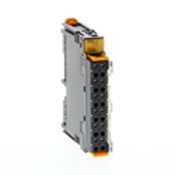
Electronic controllers use technology that takes a complete set of information from devices or the system as a whole (temperature, pressure, energy consumption, occupancy, etc.), then processes it based on system rather than individual logic to ensure optimal control of all components.
We supply: Power Management Systems, Programmable Logic Controllers, Pulse Counters
Drivers
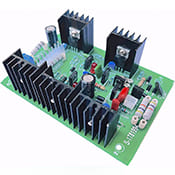
Drives are part of many modern systems, such as industrial automation systems. Drivers are needed in electronic circuits to control other components or circuits and can be used to change the characteristics of LCD displays, stepper motors, transistors, and other elements. Servo drives come in a variety of operating voltages, AC or DC, and different sizes. Stepper motor drives, have different specifications to suit the specific application.
We supply: CAN Bus Devices, Relay Drivers, Display Drivers, RS232 / RS422 / RS485 Drivers, LED Drivers, Laser Diode Drivers, Line Drivers, Multi-Function Drivers
Sensors
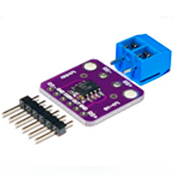
Sensors are a group of autonomous products designed to convert the collected (measured) information into electrical value for subsequent transfer to the measuring, or executive devices. Sensors are classified as follows:
- • Magnetic Field Sensors, or Hall Sensors. They are designed to detect changes in a magnetic field.
- • Optical sensors, or open channel optocouplers. They respond to changes in the illumination of the sensing element.
- • Position sensors. They respond to changes in their position relative to objects or the position of objects relative to themselves.
- • Temperature sensors. They are used to measure temperature.
- • Current sensors. For non-contact measurement of current in a circuit.
- • Angle sensors. They respond to the amount of rotation relative to an axis.
- • Deformation sensors. They respond to a force applied to the sensor.
- • Accelerometers (accelerometers). They respond to the absolute value of the acceleration of the object in which the sensor is installed.
- • Humidity sensors. Detects absolute or relative humidity of the environment around the sensor.
Gas sensors. Used to measure pressure, flow rate, concentration of certain substances in the environment.
We supply: Magnetic Field Sensors (Hall Sensors), Optical Sensors, Light Sensors, Position (distance) sensors, Current Sensors, Temperature Sensors, Ultrasonic Sensors, Angle Sensors (Encoders), Liquid level sensors, Gas Sensors, Moisture Sensors, Inertial Measurement Units (IMUs), Pressure Sensors, Pressure Sensors, Tilt Sensors
Electrical engineering and protection
Circuit breakers
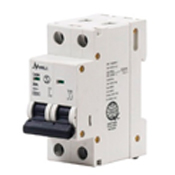
Circuit breakers are used in electrical equipment to ensure safety and prevent the risk of fire. Circuit breakers interrupt electrical circuits in the event of overcurrent.
We supply: Various circuit breakers, thermal magnetic circuit breakers, Circuit Breakers for Household Appliances, Circuit Breakers RCBO, RCD, GFCI, Surge Protection
Fuses
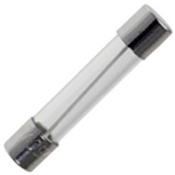
Fuses are protective components that break electrical circuits if the current exceeds a safe level. Electrical fuse is an essential part of electronics protection. The most popular fuses are fusible, glass or ceramic fuses. Fuses are divided into groups according to technical and design data. The length and diameter of the housing must match the mounting location in the fuse holder on the board or in the fuse block. The operating current must correspond to the current consumption of the power supply from the mains, as well as the current consumption of the load when the fuse is installed on the output of the source, operating voltage - the corresponding voltage of the power supply.
We supply: Ceramic Fuses, Glass Fuses, SMD Fuses, Automotive Fuses, Thermal Fuses, Self-Resetting Fuses
Shielding equipment
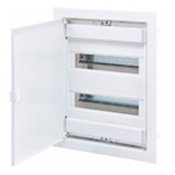
Electrical panel equipment is used to provide wiring and distribution of electricity to consumer groups, and the safe operation of the network (protecting it from short circuits and protecting people from electrocution).
We supply: Plastic distribution boards (boxes), metal distribution cabinets, Network/Server Cabinets
Passive and interconnect
Capacitors
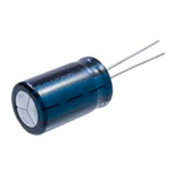
Capacitors are electrical charge accumulators, electronic passive components used in all electronic, radio engineering designs. The different types of capacitors differ from each other by the design dielectric, which affects their field of application, and by the schematic prescription to particular design applications.
We supply: SMD Ceramic Capacitors, Electrolytic Capacitors, Film Capacitors, Tantalum Electrolytic Capacitors, Multilayer Ceramic Output Capacitors, Polymer Electrolytic Capacitors, Ceramic Disc Capacitors, Starting Capacitors, Capacitors for EMI Suppression, Ionizers, High Voltage Ceramic Capacitors
Connectors
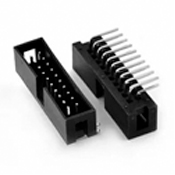
One of the most important features of modern radio equipment organization is its modularity, expressed in the fact that individual units are connected by means of mechanical elements-connectors that allow quick disassembly or disconnection of the system, not allowing the disconnection of elements at an improper moment.
We supply: Industrial Connectors, Pin and Socket Connectors, D-SUB Connectors, Power Connectors, High Frequency Connectors, Telephone and Network (LAN) Connectors, DIN Sockets, USB, FireWire Connectors, Banana Connectors, XLR Connectors, DC Power Connectors, Audio Jack Connectors, IDC Connectors, RCA Connectors, TV Connectors
Relay
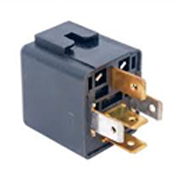
Relays are electromagnetic or semiconductor devices for switching high-power signals with low-power control signals.
- • Electromagnetic relays are subdivided by power (signal and power relays), by coil voltage (from 5 to 220V), by current on the contacts, by contact group (closing, opening, switching) and the number of contact groups.
- • Reed relays - a special type of electromagnetic relay in which the contact group is located inside a sealed tube on which the control coil is placed.
- • Reed switches are magnetically controlled contacts identical to those used in reed relays and are used to control a permanent magnetic field at a distance, in most cases in automatics and security systems.
- • Contactors are powerful electromagnetic devices for switching electrical current signals, pulses of 220V (in some cases 12 or 24).
Solid state relays are signal or power optoelectronic devices based on an optocoupler, an input circuit with an LED and a voltage regulator that extends the input voltage range and an output circuit consisting of a powerful power semiconductor device-tyristor, field or bipolar transistor.
We supply: Electromagnetic Relays, Solid State Relays, Relays for Cars, Special Relays, Reed Relays, Thermal Relays, Switching Relays
Resistors
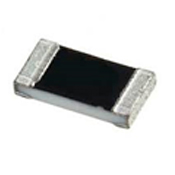
Resistors belong to the class of passive components and act as resistance to electric current.
Resistors are divided by characteristics and types, as well as by manufacturing technology: DC, AC or trim, pin or SMD (for surface mounting), wire, carbon or metal oxide. .
We supply: Chip Resistors (SMD, Surface Mount), Low Power Resistors (Up to 2W), High-power Resistors (Over 2W), Adjusting Resistors, Resistor Assemblies, Variable Resistors
Switches
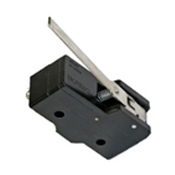
Electromechanical switches are used in radio electronics to switch DC and AC voltage circuits.
We supply: Push Button Switches, Micro Switches, Toggle Switches, Rocker Switches, DIP-Switches, Proximity Switches, Limit Switches, Gallet Switches
Transformers
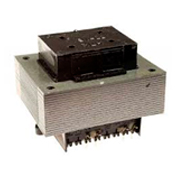
A transformer is a static electromagnetic device designed to convert electrical energy and transfer it from one circuit to another, using the properties of magnetically coupled circuits.
According to their purpose, transformers can be divided into power, matching and measuring transformers.
- • Power transformers provide power to electronic circuits with a given voltage and, at the same time, galvanic isolation of the primary and secondary circuits.
- • Matching transformers are used to match the resistance of various stages of electronic circuits, ensuring minimum signal losses and distortions.
- • Current transformers (or current sensors) are used to monitor operating currents for motors, solenoids, overloads and open circuits, while providing insulation of measuring instruments from high-voltage circuit, thus providing measurement safety.
We supply: Power, Negotiating and Measuring Transformers
Semiconductors
Diodes
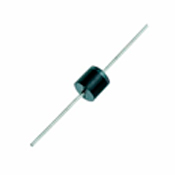
Diodes are the simplest semiconductor devices consisting of a single p-n junction whose job is to conduct current in one direction and not allow current to flow in the opposite direction.
Computers, televisions, and automobiles are just a few of the everyday objects that use these two-terminal electronic components, often to convert alternating current (AC) to direct current (DC).
Diodes can be divided into basic types according to their purpose:
- • Rectifier diodes are designed to rectify low frequency AC current;
- • Power diodes are characterized by high load capacity and are used in power circuits;
- • Fast-acting diodes are characterized by short recovery time, significant pulse current;
- • High-voltage diodes are characterized by high reverse voltage, they are used in high-voltage circuits;
- • Pulsed diodes are a type of high-frequency diodes that are designed for use in fast pulse circuits;
- • Diode bridges are diode assemblies made as a monolithic structure;
- • Microwave diodes are used in radio and microwave circuits;
- • Stabilitrons designed to stabilize the voltage level in a circuit;
- • Protection diodes are designed to protect the circuit from pulsed voltage surges;
- • Schottky diodes are a type of rectifier diode that have a low voltage drop when connected directly;
- • Varicaps are diodes that change their capacitance in proportion to the magnitude of the applied reverse voltage, are used in circuits of oscillating circuit frequency adjustment, frequency division and multiplication, frequency modulation.
We supply: Bridge Rectifiers, Small Signal Diodes, Capacitance Diodes, Schottky Diodes, Diode Arrays, Rectifier Diodes, Fast Recovery, Rectifier Diodes, Standard, Diode Modules, ESD Protection Diodes, Transient Voltage Suppression Diodes
Integrated circuits
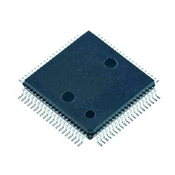
Integrated circuits are devices (electronic circuits) enclosed in a small specialized package, which can have complex functionality up to the whole microcomputer. Chips come in plastic, metal or ceramic packages for surface mounting or mounting into PCB holes. Several types of microcircuits are distinguished according to their manufacturing technology: integrated circuit, film microcircuit, hybrid microcircuit (microassembly), mixed microcircuit.
According to the type of signal processed, microcircuits are divided into 3 types:
- • Analog ICs: voltage and current stabilizers, control circuits for switching power supplies, comparators, signal generators, signal converters, analog multipliers, analog regulated amplifiers, filters, timing circuits, sensors, operational amplifiers;
- • Digital microcircuits: microcontrollers (MCU), microprocessors, memory microcircuits, programmable logic integrated circuits (PLIC), arithmetic logic circuits (ALC), keys, triggers, registers, encoders, multiplexers, adders, counters, buffer converters, decoders, demultiplexers, half-summators, logic elements (AND, OR, NOT, AND-ONE, OR-ONE and others);
- • Analog to digital chips. These include: digital-to-analog converters (DACs), analog-to-digital converters (ADCs), transceivers, interface converters, electronic devices power chips, switches, modulators, demodulators.
We supply: Power chips, Logic chips, Amplifiers, Special chips, Memory chips, Converters, Microcontrollers, Interfaces
Transistors
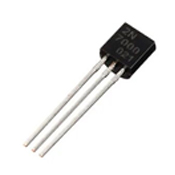
Transistors are a basic component in any electrical circuit. They are made of semiconductor materials and are used to amplify, generate, and convert electrical signals. They have three or more pins to connect to a circuit, and when voltage is applied to two of the pins, the current on the other pins changes. Transistors come in field effect and bipolar. Bipolar transistors are mainly used in analog technology, and field-effect transistors in digital technology.
We supply: Transistors Bipolar: (BJT) Arrays, (BJT) Single, Pre-Biased / Digital, RF. Transistors IGBT: Arrays & Modules, Single. Unijunction (UJT), JFET, MOSFETs, MOSFET Modules